Saturday, September 28, 2019

Highlights of Palermo

Porta Felice, Palermo City Gate 1637 (RomeArtLover)
Porta Nuova Palermo City Gate, rebuild in 1667 after a gunpowder explosion (AtlasObscura)

 Highlights of Palermo


I recently returned from a 12 day tour of Sicily, the island off the south western coast of the Italian peninsula. Sicily, the largest island in the Mediterranean Sea, is considered a part of Italy but it also has its own autonomous government and language. While Italian is based on a Latin structure, Sicilian is based on Greek, Spanish, French, Catalan, and Arabic, and has differences in grammar and structure.

There is always a bit of jet lag, and a feeling of being overwhelmed when you visit a new, far-away place. Everything is different and you cannot communicate with the people there very well. Add to that a somewhat intimidating maze of streets where graffiti is abundant, there's a lot of trash around, and stories of the mafia are floating around in your head. That was my first impression of Palermo. Not the best I'm sorry to say. After three days of staying there and being introduced to the wonders and uniqueness of Palermo, I was reluctant to leave for the next portion of our journey.

Sicily, by virtue of its location, throughout its long history has been in the cross hairs of those wishing to conquer and get gain. The Greeks came, they established settlements, they built fantastic buildings that have lasted for over 1000 years, and yet they fought among themselves over different parts of the island. Then the Romans replaced the Greeks, deforested the island to build ships of war and turned it into a place that would serve as the 'breadbasket' growing wheat to service the Roman Empire. They converted the Greek theaters where moralistic and philosophical plays were performed into places of blood and combat. The Arabs came, they dominated the western portion of the island, especially in the Palermo area, they brought citrus plants, eastern wisdom, and distinctive cuisine. The Normans, the Lombards, the Spanish, and then finally the House of Savoy came, with the Northern Italians and a plan to unify the peninsula with the island.

Each and every one of these governing bodies has pretty much shafted the people of the island in favor of their own self interest, so if anyone is wondering why Sicilians might have a bit of a fatalistic point of view and be reluctant to accept everyone's great new ideas for improvements in society, now you have some kind of understanding of why. I tell all of this to give you an idea of what makes Palermo tick and why it is like it is today. It sits at the intersection of several differing and conquering cultures and has made a one of a kind distillation of all of those differences to become what Palermo is today. 
 
Gems of Palermo: Capella Palatina- The Palatine Chapel


The Sanctuary of Capella Palatina showing Christ as "Pantocrator" (my photo).
In 1132, Roger II, a Norman king of Sicily desired a grand chapel to be built on the site of a former church in the royal palace. This chapel took about 8 years to build and the intricate mosaics decorating it took about 10years to complete. The mosaics are the charms of this chapel, the ceiling and the walls are covered with them. Featured in them are stories from the Bible and depictions of Saints and Apostles. The mosaics in the Palatine Chapel are believed to be the largest example of Byzantine mosaics in the world. The palace has been put on the UNESCO world heritage list because of the unique blending of architecture and the historicity of the site.
Interior of Capella Palatina (my photo).


The chapel is dedicated to Peter the Apostle (also known as St. Peter, Simon Peter), and features a domed basilica with three apses with six pointed arches off the nave. The architecture is a harmonious melding of Norman, Arabic, and Byzantine. The arches are distinctly Arabic and another feature of Arabic design is the 8-point star which is used abundantly in the chapel and the stars are arranged on the ceiling forming a Christian cross. The ceiling of the chapel is an example of carved wood known as muqarnas, a three dimensional version of a geometric design. This is a form of ornamented vaulting used on a ceiling and is an intrinsic part of Arabic/ Islamic architecture. 

Interior showing the muqarnas, antique wood ceiling in the Islamic style (italianways.com)               
 
The nave features texts in Arabic, Latin, and Greek. In the sanctuary there is a depiction of Christ known to Christian iconography as “Pantocrator”. You can see he is holding his hand a certain way. The Palatine chapel is considered a supreme example of Byzantine artistic style and has the distinctive flair added to it with the blending of Sicily's, and Palermo's in particular melting pot culture. It is seen as a shining example of multicultural cooperation. The royal palace is currently the seat of the regional government of Sicily.
Detail of mosaics in Capella Palatina (Italianways.com)
Detail of mosaics (my photo).

San Cataldo Church
(Chiesa di San Cataldo)
San Cataldo church, showing the distinctive pink-red domes (my photo).

 
This is an example of Arab-Norman architecture and also part of the UNESCO World Heritage site in Palermo. This church was founded in 1160, by Maio of Bari, the Chancellor or Prime Minister of Norman ruler William I (known as “The Bad”). Unfortunately the Chancellor was assassinated and that resulted in the interior of the chapel never being finished or decorated, and it has remained that way for over 800 years. Yet, it is an intriguing and distinctive building that is brilliant in its austerity. The most distinctive feature being the three pinkish-red cupolas or domes.
Detail of San Cataldo


Interior of San Cataldo


Agatha Patron Saint of Palermo, Quattro Canti
Qattro Canti- The Four Corners of Palermo
 
The old historic district of Piazza Vigilena is known as Quattro Canti, it is a baroque square where the two main streets of Palermo cross (Via Maqueda and Corso Vittorio Emanuele). This square was commissioned by a Spanish Viceroy with a very long name about 1610. Four palaces ring the square with convex facades. On the facades you can see four different levels, representing nature and ascending up to heaven. The first level consists of fountains representing ancient rivers of the area, next, there is a figure on each palace which represents one of the four seasons, with Doric columns framing the sides of the figures. The next level on each of the buildings names a Spanish ruler (Charles V, Philip II, Philip III and Philip IV), set off by Ionic columns. The top level of each one shows a depiction of one of the patron saints of Palermo, Agatha, Nymph, Olive and Christine, set off by Corinthian pilasters. 

Quattro Canti, showing the top level depicting a Saint.


View of Quattro Canti from above showing the four convex facades.


Piazza Pretoria, Fontana Pretoria or otherwise known as
The Fountain of Shame (circa 1554)
This elaborate fountain is done in the high renaissance style features a bunch of naked people in various poses along with all kinds of animals, sea creatures, nymphs, monsters, sirens, and other real or mythical creatures. It was created for a Spanish nobleman, Don Luigi de Toledo, as the mother of all fountains to decorate his estate in Florence. When Don Luigi died he left his son with a mountain of debt, so his son sold the fountain to the Palermo Senate. The fountain was taken apart and transported by boat to Sicily, all 644 pieces of it! Some of the statues were damaged during transport and the Palermo Senate also found out that Toledo's son kept a few of his favorite statues for himself. It is called the fountain of shame because of the nude statues which happen to be visible from the church and the nunnery across the square. It is rumored the nuns used to try to put clothes on the statues.


Tuesday, September 17, 2019

What's in a portrait?

Roman, Greek or Egyptian?
Is the answer in the eye of the beholder?


After a recent trip to Italy and to the ancestral village of my paternal grandparents, I embarked on a quest to find more about the experience of being a hyphenated American, in this case, an Italian-American one. Living in the Rocky Mountains, as I do, far away from the East Coast of my youth, I often feel like I have lost part of my heritage by living where I do. While perusing articles of what it meant to be an Italian American, I found a piece where the author stated that the Fayum Portraits all looked Italian to him. Never having heard of these portraits before, despite having studied two courses of Art History, I decided to learn more about them. 


My quest to discover something unique about heritage became an art and culture exploration, and depending on who you ask, those assessing the look of the portraits all seemed to attribute them to their own or to their desired idea of an ethnic group. They look Roman! They look Greek! They look Egyptian! To me they look like an amalgamation of the cultures of that specific time and place. DNA and dental studies of the Fayum mummies have shown more solidarity with their Egyptian heritage but one can also see Mediterranean features in the portraits. The most striking feature seems to be their enlarged eyes and the realism represented in the portraits.

The Fayum Portraits are a group of naturalistic portraits painted on wood and attached to mummies found from the time that the Roman Empire controlled Egypt. They are classified as 'panel painting' in that they are painted on flat wood panels. The paint is generally done in encaustic style with wax mixed pigments or an egg based tempura. Mummy portraits have been found across Egypt, but these particular portraits date to the time of the Roman occupation of Egypt (approx 1st century BC to 1st century ad and after). The wood portraits are placed in the wrappings of mummies where the face would be, giving personality to the person wrapped within. They are very realistic but all seem to emphasize the face with very large eyes. They have surprisingly contemporary hairstyles and are quite individualistic showing expressions, clothing styles and jewelry, all done in vivid color with even gold inlay on the jewelry. They are in a Greece-Roman style, rather than Egyptian. About 1000 of these portraits exist in various places around the world, such as The British Museum, The Louvre, The Metropolitan Museum of Art, and at various colleges and institutions. Most of the portraits have been removed from their mummies. It is speculated that the dry Egyptian climate helped preserve them and the wax mixed pigment technique helped preserve the colors and also aided in preservation.

In the 1800's British, French and Germans scouted them out for art collectors, museums, and even used them for firewood on cold desert nights when on digging expeditions. Some recovered portraits were lost at sea when being transported from Egypt to Europe. Few who sought them out properly documented the portraits or the circumstances of their recovery, so it makes their relevance, as far as academics are concerned, have less value than they otherwise might have.

In 1887, a British archaeologist, Flinders Petrie, excavated at Hawara Egypt and found a Roman necropolis from which he originally recovered about 80 of the portraits. Petrie was one of the few who did document and publish his findings about the portraits. Petrie did another excavation in 1910-11 but by the time this second dig occurred the French, Germans, and Egyptians were also looking for the portraits to sell to art collectors and they did not document their findings. Several of the portraits found in the British museum arrived there under shadowy undocumented circumstances. It makes you wonder how many might be collected in the mansions of the ultra rich that no one really knows about, and if these were plundered, their historical significance has been lost to the world forevermore.

The portraits depict persons from childhood to old age and were set into the mummy wrappings, the artistry shows skilled use of light and shade, 3-d appearance, and all depict large eyes, bringing about speculation about them being similar to icon paintings, whether they were painted before or after the person's death, whether they are truly realistic or are idealized conceptions of the person they represent. They appear to be a combination of Roman and Egyptian funeral tradition, for the wealthy, and only appear after the Romans established Egypt as a province. They look like paintings of the old masters but were in reality done 1500 years earlier.

Sources: Smithsonian.com, Wikipedia, Mikedashhistory.com, themillions.com


Thursday, August 15, 2019

Sourdough by Robin Sloan, a book review...

I've been wanting to read this book for a while. I read the author's first book (Mr. Penumbra's 24 hr Bookstore) and enjoyed it so when I learned he had written another book I mentally added it to my To-Be-Read list. I walked past it a few times, and read the cover during my regular haunts of bookstores and libraries but never actually got down to the business of reading it until now. I am also someone who has tried to raise/keep a sourdough starter and cook with it but has not had good luck in that respect, so from that point of view the book also caught my interest. 


What a fun read! Need a good escape from the seriousness of life? Read this book. This book is hard to describe...there's a foodie focus, and having lived in the Bay area years ago I can relate to the setting and atmosphere created in the story. "Lois" is a software engineer leaving her comfort zone of a small town to go work for a technology whiz start-up company in the big city (San Francisco). She is spending all her time at the office with the other technological geniuses, who hardly even venture home from work and when they do they never cook. Lois soon relies on a local take-out and delivery joint for all her dinners and has food delivered nightly to her apartment. The place is run by two mysterious brothers, they cook the food and deliver soup and sourdough bread to her every night, she becomes their best customer. One day they inform her, that they are suddenly moving away and give her a gift of their sourdough starter since she has loved eating their food so much. They tell her to take care of it, learn to bake with it and to play it music to keep it happy. 

And... the story gets odder from there, but in a good way. It's fanciful, fantastical, farcical, and a quirky mix of oddball characters, technology, and the ancient art of baking bread for meaning and sustenance. Get your fill of inside foodie jokes (the urban scale Panettone is one example) and nerdy humor when you learn the story of how the mysterious Masque people (ancient keepers of the sourdough starter) became pirates..."For while other pirate crews were sick from moldy rations, the Masque pirates were strong from rations made of mold".

This book has an unusual and entertaining plot, it's a clean read, a quick read, great for travel or the beach and many parts are laugh out loud funny. Ancient world meet modern world, where a robot arm is programmed to stir the dough and the bread oven and sourdough starter are characters in their own right.

You may yearn to bake after reading this book. You will definitely want to sink your teeth into a butter slathered slice of fresh sourdough bread while reading it.


Thursday, July 25, 2019

Disturbing trends....

I don't think I have ever repeated/reposted an entire article on this blog, I like to write my own pieces, but this seems to be a disturbing trend now a days in many areas of our lives. (It seems to be another reason why I dislike Twitter and will never become a "tweeter"). This article comes from The Spectator UK, was written by Karen Yossman and was published on May 18, 2019.


 Writers blocked: Even fantasy fiction is now offensive

Persecution is endemic in the vicious world of Young Adult publishing

Image result for amelie wen zhao
It was Lionel Shriver who saw the writing on the wall. Giving a keynote speech at the Brisbane Writers Festival three years ago in which she decried the scourge of modern identity politics, Shriver observed that the dogma of ‘cultural appropriation’ —which demands no less than complete racial segregation in the arts — had not yet wrapped its osseous fingers around the publishing industry. But, she warned: ‘This same sensibility is coming to a bookstore near you.’ Reader, it has come.
 
Next month a young, Asian-American author called Amélie Wen Zhao was due to celebrate the publication of her debut novel Blood Heir, the first in a three-part fantasy series for which Zhao was reportedly paid a six-figure sum by Delacorte Press, a children’s imprint of Penguin Random House. Set in the Russian-inspired ‘Cyrillian Empire’, Blood Heir tells the story of a magic-wielding princess who is forced to flee her kingdom following her father’s murder. ‘In a world where the princess is the monster, oppression is blind to skin colour, and good and evil exist in shades of grey… comes a dark Anastasia retelling,’ blurbed the publishers.
Before the manuscript had even reached the presses, however, a furore erupted when Zhao, a 26-year-old banker born in Paris and raised in Beijing, was accused of racism. Armed with merely the blurb and a handful of excerpts from the book, her critics — many of them fellow authors, editors and bloggers in the Young Adult genre (known as YA) — repeatedly tore into Zhao on sites such as Twitter and Goodreads, outraged by, among other things, the novel’s depiction of indentured labour. For despite Blood Heir’s Slavic setting, her detractors assumed the plot was inspired by American slavery and thus something Zhao had no business writing about because she is not black. In a tirade that might surprise students of Russian antiquity, one critic reportedly raged: ‘[R]acist ass writers, like Amélie Wen Zhao, […] literally take Black narratives and force it into Russia when that shit NEVER happened in history.’
One prominent writer even claimed the very premise of a fictional world in which ‘oppression is blind to skin colour’ was racist and joined others in pillorying Zhao for creating — and then killing — a ‘black’ character in the novel. No matter that the only discernible evidence for the character’s ethnicity was a vague description of dark curls and ‘bronze’ skin. Another YA author, Ellen Oh, who joined in the fray by piously tweeting ‘colour blindness is extremely tone deaf. Learn from this and do better’, was herself forced to issue an apology after being castigated for using the phrase ‘tone deaf’, a turn of events that would be comical were it not so preposterous.
For Zhao, the onslaught proved too much and in January she released a statement titled ‘To The Book Community: An Apology’ in which she confirmed she had withdrawn Blood Heir from publication. However, in a volte-face last month, Zhao revealed that, with help from multicultural scholars and ‘sensitivity readers’, she had re-written the novel and would now be publishing it in November.
Would that Zhao were an outlier. If anything, hers is now a typical experience in the vicious world of YA publishing. Last year another fantasy novel, about a young protagonist rebelling against a sectarian society, inspired an 8,000 word blog post calling it ‘the most dangerous, offensive book I have ever read’ and set off a wave of recrimination against the author on social media. Around the same time Keira Drake, a marketing consultant turned YA writer, agreed to pulp hardback copies of her debut fantasy novel and re-write it with help from — you guessed it — sensitivity readers after critics claimed it contained ‘damaging’ depictions of Native Americans.

Because this persecution on the most spurious grounds is endemic — and because so many of its actors are themselves YA authors — plenty of those brandishing the proverbial pitchforks have, upon publication of their own novels, subsequently found themselves staring down the sharp side of a four-pronged rod. In February, Kosoko Jackson, a gay, black, erstwhile sensitivity reader who had previously joined in the skirmishes against other authors, pulled his own debut novel, A Place for Wolves, after his peers pronounced it ‘insensitive’ to Muslims on account of its Albanian Muslim antagonist.
Nor is the contagion confined to American authors. Last month John Boyne, best known for the Holocaust novel The Boy in the Striped Pyjamas, received such a barrage of abuse prior to the publication of his latest book, My Brother’s Name Is Jessica, which features a transgender central character, that he was briefly forced off Twitter. Critics labelled the book ‘transphobic’, suggesting that because Boyne is not transgender the story ‘lacked authenticity’ and its title ‘misgendered’ the fictional protagonist.
At almost the same moment that Boyne was deleting his Twitter account, Lincolnshire-based Zoe Marriott, a prolific writer of YA fiction, was also being hounded on the site over her new fantasy novel, The Hand, the Eye and the Heart, because it’s set in ‘fairy-tale China’. One prominent YA blogger warned: ‘White authors need to stay the hell away from the stories of people of colour.’ Curiously, said blogger’s day job involves manning the tills at Foyles, one of London’s most revered bookshops — pity the poor sod who dares trouble her for a copy of Othello, or Tolkien for that matter.  The father of fantasy fiction has come in for criticism for his portrayal of orcs in The Lord of the Rings. Some feel his work is ‘racialised’. And what’s a sensitive young bookseller to do if a young customer requests a C.S. Lewis, whose Narnia books were branded ‘blatantly racist’ and misogynistic by fellow fantasy author Philip Pullman? Pullman has since been labelled ‘transphobic’ himself after tweeting in October that he was ‘finding the trans argument impossible to follow’.
Once you start seeing goblins in fairyland, there’s no end to it. Even the most enlightened author can cause offence. It is only a matter of time before it begins to eat away at every genre until, as Shriver predicted, ‘All that’s left is memoir’.
Already poets might understandably feel anxious: last summer The Nation, one of America’s most venerable literary magazines, published a 14-line poem about homelessness, which was swiftly accused of co-opting a ‘black vernacular’ and criticised for its use of the word ‘crippled’. Instead of defending the verses it had previously deemed worthy of publication, the magazine immediately issued an apology so spineless one of its own columnists said it resembled ‘a letter from [a] re-education camp’.
But it’s not just writers who ought to be worried. The logical apogee of a prohibition on cultural intercourse is a future in which each person is allowed to document only his or her precise subjective experience. A future, in other words, where fiction is history. And that sounds like a very dreary prospect for us all.

Spectator.co.uk/podcast
Karen Yossman on writers under scrutiny.


Find the THE SPECTATOR here:  https://blogs.spectator.co.uk/

The specific article here:
 https://www.spectator.co.uk/2019/05/writers-blocked-even-fantasy-fiction-is-now-offensive/?fbclid=IwAR2S2hj3CSd7-gVZuH37riIQnoOJhI90Zg32a9ueJLBeivOoUixxZzhOVNo


Friday, July 19, 2019

Moon on my mind

We are approaching the 50th anniversary of landing a man on the moon. In the US this was, July 20, 1969. Naturally I find myself thinking about what we were doing on that historic day, at that historic moment.

Our family had one small television (black and white) and it was perched on top of the dresser in my parent's bedroom.We all sat on the bed and watched Neil Armstrong plant the flag and take his first steps on the moon. We sat in awe and watched, and dreamed of going to the stars.

"One small step for (a) man, one giant leap for mankind!"

Apollo 11 was the first craft to land humans on the moon and then make the trip back home.


Near side of the moon showing the "marias" or seas of solid ancient lava.

Moon Trivia:

The moon is in a synchronous rotation with the earth. This means that we on Earth, always see the same side of it. This is called the "near" side of the moon. This side has numerous "maria" visible on it. A moon maria is a dark area visible on the near side of the moon which consists of solid pools or "seas" of ancient lava. The side of the moon that we do not see, which is always turned away from Earth is called the "far" or "dark" side of the moon there are many craters there. It is not called dark because there is not light there, we just never see it from our vantage point on Earth.

Far or dark side of the moon.

The moon is the second brightest visible object in the Earth's night sky. (The brightest is the Sun.)

Apollo 8 astronauts were the first humans to see the far side of the moon with the naked eye during the orbit of the moon in 1968.

The moon's gravity is 1/5th of the gravity on Earth. Average temperature on the moon is 107 C during the day (224 F) and -153 C at night (-243 F).

Apollo 11 brought back 21.7 kg (about 48 lbs) of rocks from the moon, these rocks are made of basalt, which is an igneous rock. Apollo11 landed on an area of the moon called the Sea of Tranquility.

600 million people are estimated to have watched the televised landing of Apollo 11 on the moon in 1969.

Six Apollo missions landed on the moon from 1969 to 1972 at an estimated cost of 2.54 million US dollars.
Astronaut footprint on the moon.

Moon Timeline:

1959- The uncrewed Russian spacecraft Luna 2 crash landed on the moon.

Feb 1966- The uncrewed Russian spacecraft Luna 9 made a 'soft' landing on the moon and transmitted back 9 pictures of the surface.

A "soft landing" is when some type of aircraft, rocket, or spacecraft makes a landing that would be deemed 'survivable' and results in no damage or destruction to the aircraft.

June 1966- An uncrewed American spacecraft Surveyor 1, made a soft landing on the moon.

July 1969- Apollo 11, had three crew members, Michael Collins (who remained in the command module), Buzz Aldrin, and Neil Armstrong.

Apollo 11 Crew


Can microbes survive on the moon?

In 1969, Apollo 12 landed on the moon next to the remains of the Surveyor 3 (launched in 1967) robot spacecraft, which had been exposed to the lunar surface for 31 months. The crew retrieved several pieces of the spacecraft and returned them to earth, where they found bacteria that had hitched a ride and survived. What was the strain of bacteria?

Streptococcus mitis

Researchers grew Streptococcus mitis from a sample of foam from inside a TV camera on the Surveyor 3 spacecraft, which was not sterilized when it was launched in April 1967. The bacteria had remained in suspended animation for 31 months in space and reanimated when placed in a nutrient-rich broth back on earth. S.mitis is a harmless bacteria found in our mouths, noses and throats. Some scientists have since speculated that the equipment may have been contaminated after returning to earth, however NASA has maintained the camera was opened under sterile conditions.


Friday, June 28, 2019

Super shorts or Flash Fiction

Super Shorts or Flash Fiction is a short story that is often one page or less. 

I discovered Fredric Brown today while reading the introduction to a new book I just started yesterday entitled, "The Best of Connie Willis".  I've enjoyed her historical fiction/time travel novel "The Doomsday Book" about a university student that travels back in time to study the Black Plague and gets stuck in time there. Willis has also won awards for her short story writing and credits many classic Science Fiction authors for their influence on her as a writer. One of the authors she mentioned was Brown. I am the ever curious reader, so I looked him up and found some short story gems to share. Willis' other novels also have a waiting place on my to-be-read shelves.

Brown is a master of the super short story, his writings have been adapted for the original Star Trek series (Captain Kirk fighting the Gorn), and the old show Outer Limits, a few movies were also made.

Answer by Fredric Brown (1950)

Dwan Ev ceremoniously soldered the final connection with gold. The eyes of a dozen television cameras watched him and the subether bore throughout the universe a dozen pictures of what he was doing.
He straightened and nodded to Dwar Reyn, then moved to a position beside the switch that would complete the contact when he threw it. The switch that would connect, all at once, all of the monster computing machines of all the populated planets in the universe -- ninety-six billion planets -- into the supercircuit that would connect them all into one supercalculator, one cybernetics machine that would combine all the knowledge of all the galaxies.
Dwar Reyn spoke briefly to the watching and listening trillions. Then after a moment's silence he said, "Now, Dwar Ev."
Dwar Ev threw the switch. There was a mighty hum, the surge of power from ninety-six billion planets. Lights flashed and quieted along the miles-long panel.
Dwar Ev stepped back and drew a deep breath. "The honor of asking the first question is yours, Dwar Reyn."
"Thank you," said Dwar Reyn. "It shall be a question which no single cybernetics machine has been able to answer."
He turned to face the machine. "Is there a God?"
The mighty voice answered without hesitation, without the clicking of a single relay.
"Yes, now there is a God."
Sudden fear flashed on the face of Dwar Ev. He leaped to grab the switch.
A bolt of lightning from the cloudless sky struck him down and fused the switch shut.

 For another super short shocker titled "Hobbyist" by Fredric Brown see my other blog here http://adarkandstormynightgothicreads.blogspot.com/

Tuesday, June 18, 2019

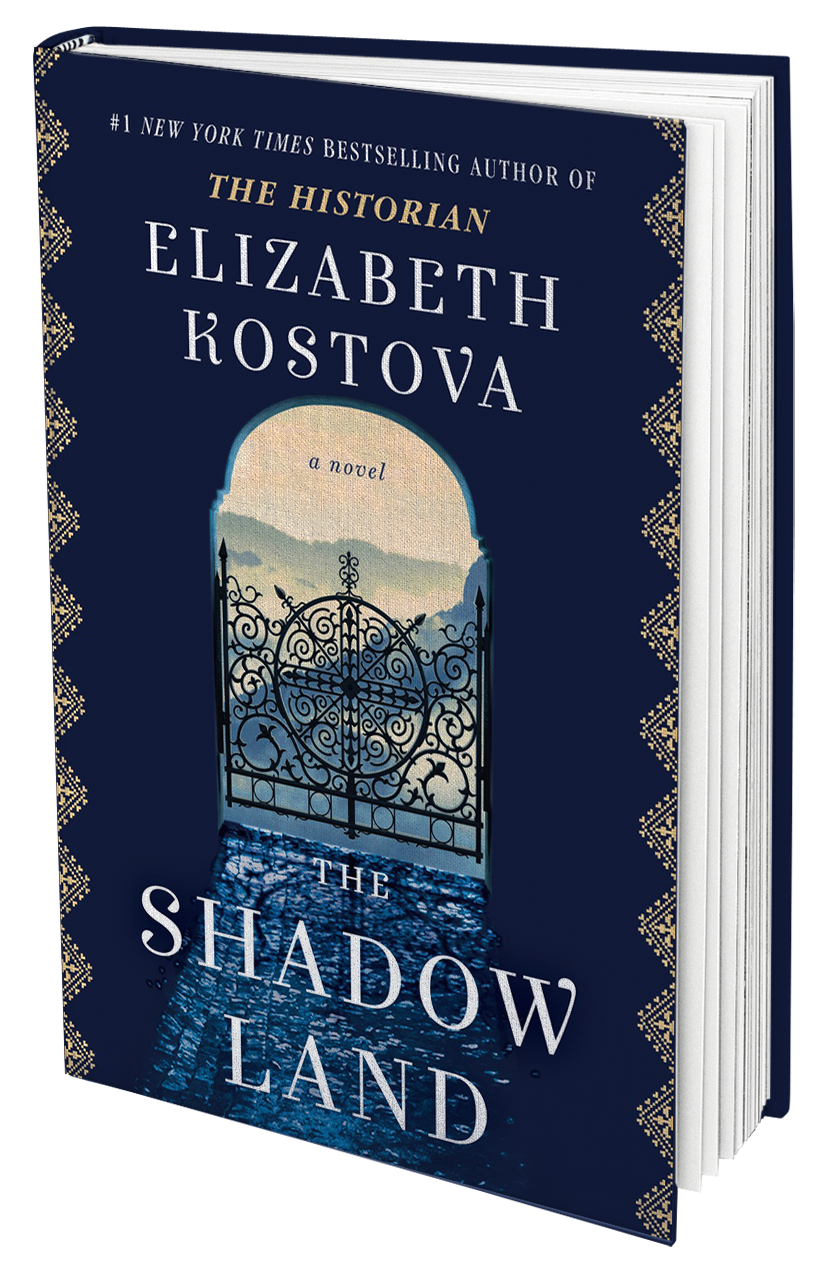
The Shadowland by Elizabeth Kostova

The Shadowland by Elizabeth Kostova 
Book Review

Sofia, Bulgaria
From the title and from having previously read The Historian (about Vampires) by this author, I was expecting something different from this book. After that initial disappointment I was able to quickly immerse myself in the story and go with it because the beginning of the book is quite mysterious making the reader want to continue on.

I never really considered the country of Bulgaria and this book opened my eyes about this place. The mysterious beginning pulled me in and the story is told in a series of flashbacks from the main character Alexandria's life and the life of the person whose cremation urn she inadvertently received possession of as the book starts. Alexandra is still mourning the disappearance of her older brother one day on a family hiking trip, and decides to start a new chapter of her life by taking a teaching assignment in far away Bulgaria. She and her brother had always dreamed of visiting Bulgaria ever since they were young children and found a map of the country in an old world atlas their father had at home.


When she arrives in Bulgaria she has a chance meeting with three people outside her hotel in Sofia, the capital city of the country. After that encounter she realizes she is now in possession of an extra suitcase that is not hers. The case contains a burial urn with human ashes. She embarks on a wild journey lasting a few weeks, taking her all around the countrysides of Bulgaria, to try and track down the owners of the burial urn.

Kostova's writing is very descriptive and the mystery of the person in the urn and the tumultuous post WW II history of Bulgaria unfolds slowly throughout the book. The reader tags along with Alexandria on her journey of self discovery and in search of the people that lost the urn.


I reality though, the book is a bit of a slog, going on and on with little action happening with somewhat improbable circumstances following this girl around Bulgaria. She knows nothing about the country, can hardly communicate with the people, has little money, and does not even bring a change of clothes as she is miraculously befriended by a complete stranger (but a kind one) who is an English/Bulgarian speaking taxi driver that conveniently has nothing better to do for several days and they embark on a wild goose chase across Bulgaria to find the owners of the urn. If you can get past all that you can enjoy the story for what it is, a haunting and bittersweet tale of a nation's resiliency through a time of political oppression and the triumph of a people to withstand hardship and still go on with a smidgen of hope for a better future. 


A bit bland, a bit slow, 400 pages of not a lot of action, Alexandra is kind of a weak character, and a gay character is just thrown in there with no relevance to the story line, but I don't feel I wasted my time reading this book. Many issues remain unresolved by the time the book concludes but I still enjoyed the read. I expanded my horizons, one of the reasons I love to read so much and the author does have a talent with words. (3.5 stars out of 5) 

Reading Roundup...

I've reached a benchmark of reading 68 books out of my stated goal of 75, so far this year, it's time for an update. Over the years ...